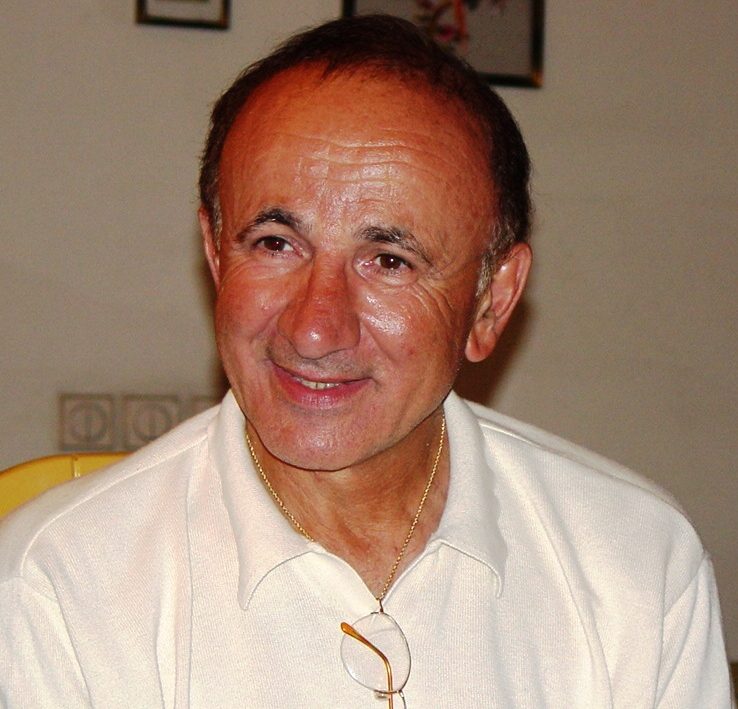
Tahmouress Sadeghi | Astrodynamics

Tahmouress Sadeghi shares information about the Scientific and Technical Aerospace Reports

Includes powered and free-flight trajectories; and orbital and launching dynamics. N91-11777% Telecommunications. GEOSTATIONARY ORBITAL CROWDING: AN ANALYSIS OF PROBLEMS AND SOLUTIONS M.S. Thesis Robert Murrell Wilkison, Jr. 1990 249 p Sponsored by AFIT, Wright-Patterson AFB, OH (AD-A224681; AD-E501254, AFIT/CI/CIA-90-055) Avail; NTIS HC/MF A11 CSCL 22/3 Geostationary orbital crowding is currently a pressing international issue. The disagreement lies between undeveloped and developed nations as to whether geostationary equity or efficiency should be the emphasis of international orbital slot and frequency allocations. The primary desire of less developed nations is an assurance that fundamental satellite resources will be available when they are ready. This can only be realized if the international community sets aside resources for their exclusive use, to be usable later. The developed countries feel that such a plan would result in inefficient utilization of orbital resources. They also believe that by the time these undeveloped nations are able to launch communications satellites, technology will have made added resources available for their use. The best possible plan will be one that uses a composite of all practical options. All technical solutions must be incorporated as they become viable, while regulatory alternatives should be implemented as needed, to ensure that every nation has access to space communications resources when their situation dictates. Excess orbital resources may be marketed to further the development of telecommunications in the developing world. Various methods for ensuring both efficient and equitable future access to space communications resources are detailed.

For more information visit:- https://tomsadeghi.wixsite.com/tomsadeghi
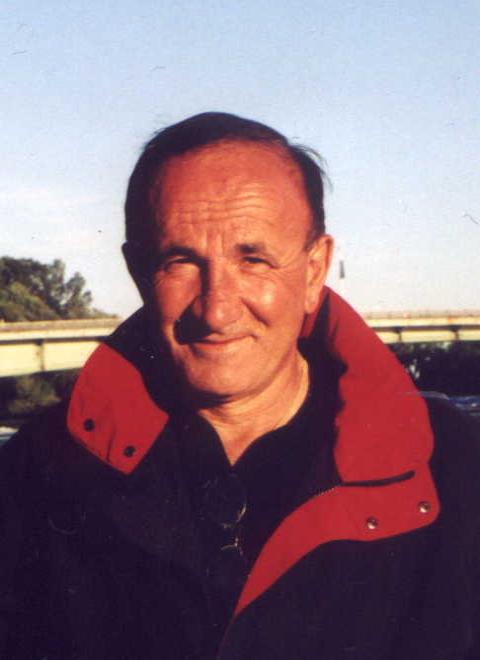
Tahmouress Sadeghi | Integrated fault-tolerant control law

Tahmouress Sadeghi shares information about Integrated fault-tolerant control law

This paper gives a progress report for developing an integrated, fault-tolerant control law (IFTCL) which has capability for control reconfiguration and post-stall maneuvering. To integrate these two technologies in an aircraft flight control system is attractive because in post-stall conventional surfaces lose their effectiveness which resembles the aircraft in a conventional flight losing its control surfaces due to battle damage or actuator failure. 

To develop such a control technique concurrent efforts were initiated. These efforts consisted of developing and evaluating control techniques for IFTCL, modifying a 6DOF high-performance aircraft (HPA) model to have thrust vectoring capability, and laying out guidelines for developing a full-up, nonlinear control law (with transition logic) capable of continuously reconfiguring aircraft effecters for post-stall maneuvers and reconfiguration due to battle damage and/or actuator failure.

 To read more follow the link:- https://ieeexplore.ieee.org/author/37353026100
https://ieeexplore.ieee.org/document/521984

Tahmouress Sadeghi | AIRCRAFT INSTRUMENTATION

Tahmouress Sadeghi shares the information about aircraft instrumentation on the below blog.

Includes cockpit and cabin display devices; and flight instruments. For related information see also 19 Spacecraft Instrumentation and 35 Instrumentation and Photography.

N91–11750 Kansas State Univ., Manhattan. INTEGRATION OF TIME-VARYING DATA INTO KNOWLEDGE-BASED SYSTEMS FOR AVIONICS APPLICATIONS Ph.D. Thesis David Scott Hardin 1989 93 p Avail: Univ. Microfilms Order No. DA9016521 Any knowledge-based system that is to be placed in the cockpit must deal with a wealth of time-varying data, and do so in real time. An avionics knowledge-based system thus requires a conventional signal processing front end to identify relevant signal characteristics, a knowledge representation scheme that lends itself naturally to the representation of uncertain numeric data, and an efficient, interruptible inferencing method. A hardware architecture for knowledge-based avionics systems is proposed which consists of a signal processor and one or more symbol processors. The blackboard paradigm is proposed as the basis for the software architecture. Dempster-Shafer theory is used to express uncertain numerical data. It is shown that the Dempster-Shafer formalism and the four-valued logic of Belnap are complementary, allowing numeric and non-numeric expressions of uncertainty to co-exist. It is also demonstrated that the Kalman filter, a common software component of avionics systems, can be used to provide uncertainty information about numeric data to a Dempster-Shafer evidential reasoning system. An initial software implementation developed in the Ada programming language is discussed. Dissert. Abstr.

N91–11715? (England). THE CERTIFICATION OF THE AVIONIC SYSTEMS ON THE ATP TO JAR 25 J. A. Shimmin In DGLR, European Forum: The Evolution of Regional Aircraft Technologies and Certification 1989 p 53–61 (For primary document see N91–11707 03–03) Avail; NTIS HC/MF A10 British Aerospace Public Ltd. Co., Woodford N91–11729# Deutsche Gesellschaft fuer Luft- und Raumfahrt, Bonn (Germany, F.R.). DIGITAL GLASS COCKPIT FOR COMMUTER AIRCRAFT Horst Kister In its European Forum: The Evolution of Regional Aircraft Technologies and Certification 1989 p 157–168 (For primary document see N91–11707 03–03) Avail: NTIS HC/MF A10 N91–11761% Technische Univ., Delft (Netherlands). INSTRUMENTATION REQUIREMENTS AND PRESAMPLE FILTER DESIGN FOR MEASUREMENTS DURING NON STEADY MANEUVERS WITH THE HAWKER HUNTER Mk 7, PH-NLH K. vanWoerkom In its Essays on Stability and Control Oct. 1989 15 p (For primary document see N91–11759 03–09) Avail: NTIS HC/MF A12

For more information regarding Scientific and Technical Aerospace information read the book by Tom Sadeghi.

Tahmouress Sadeghi | LAUNCH VEHICLES AND SPACE VEHICLES

includes boosters; operating problems of launch/space vehicle systems; and reusable vehicles. For related information see also 20 Spacecraft Propulsion and Power.

N91-11823# Construcciones Aeronauticas S.A., Madrid (Spain). Space Div.

THE DEVELOPMENT OF THE ARIANE-4 ADAPTOR 937B A. Jimenez, J. Pascual, J. Lechon, and J. Aceituna In ESA, Space Applications of Advanced Structural Materials Jun. 1990 p 79-84 (For primary document see N91-11812 03-24) Copyright Avail; NTIS HC/MF A19

N91-11853% Aerospatiale Aquitaine, Saint-Medard en Jalles (France). Strategic and Space Div. WOUND HELIUM PRESSURANT TANK DEVELOPMENT FOR 2ND STAGE OF ARIANE 4 LAUNCHER Y. Valy and P. Coquet ſn ESA, Space Applications of Advanced Structural Materials Jun. 1990 p 267-269 Previously announced in IAA as A90-42134 (For primary document see N91-11812 03-24) Copyright Avail; NTIS HC/MF A19

For more information please visit our website:- https://tomsadeghi.wixsite.com/tomsadeghi
Blog:- https://tomsadeghi.blogspot.com/

Tahmouress Sadeghi

Tahmouress Sadeghi is a Ph.D. holder in computer and electronic engineering from Rensselaer Polytechnic Institute with a specialty in fault-tolerant flight and jet engine control systems.

Tahmoursee Sadeghi

He has five very successful children

Sepehr Sadeghi – Computer Engineer & Building Developer

Soraya Sadeghi – Attorney at Law in Boston                

Rokhsanna Sadeghi – MD

Erika Sadeghi – MD

Keyan or John Sadeghi – MD

For more information about him visit:-

https://tahmouresssadeghi.design.blog/

https://tomsadeghi.blogspot.com/

Tahmouress Sadeghi | Instruction Execution Cycle

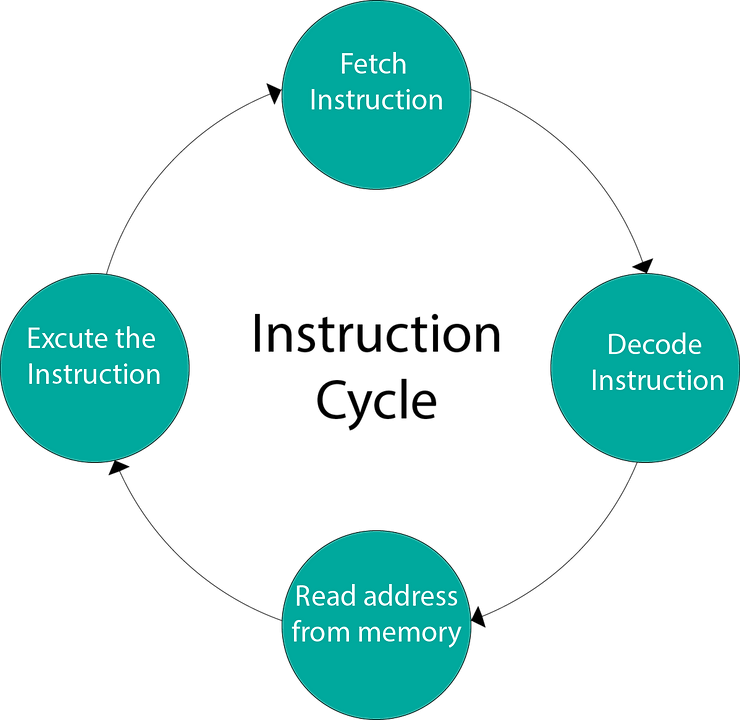
Instruction Execution Cycle:

For every instruction of the program, the management unit (a a part of CPU) carries out 3 basic operations, referred to as the machine cycle. it’s conjointly referred to as instruction cycle.

Tom Sadeghi

1.Fetch Instruction:

The process of transferring a program instruction from memory to central processor is termed fetch instruction. The central processor gets a program instruction from main memory for taking action on that.

2. decrypt Instruction

The process of decipherment the instruction in order that the pc will perceive is termed decrypt Instruction. Actually, during this step, {the necessary|the needed|the mandatory} circuits ar activated that ar required to execute the instruction.

3. Execute Instruction:

The process of taking action on the decoded instruction is termed Execute Instruction. once decipherment the instruction, the processor executes the instruction by victimization the activated circuits. The results of the execution ar written back to main memory or central processor registers.

For more information please visit our website:- https://tomsadeghi.wixsite.com/tomsadeghi

Blog :- https://tomsadeghi.blogspot.com/

Tahmouress Sadeghi – Components of Computer System

In this blog Tahmouress Sadeghi explains about components of computer system. To know about it read the blog below.

A ADPS consists of varied hardware parts. every element plays a selected role in ADPS. These parts ar interconnected to every alternative in such the simplest way in order that the pc will perform its functions.

Processor:

Processor is that the main element of a ADPS. It controls the operations of the pc and co-ordinates the opposite parts of the pc. It performs all the functions in line with the program directions. It decodes and executes the directions. it’s thought of the brain of the pc. It contains variety of special-purpose registers and Arithmetic Logic Unit (ALU). A electronic equipment ADPS consists of 1 or additional processors. once there’s just one processor in a very ADPS, it’s usually referred to as the Central process Unit (CPU).

Main Memory:

Programs and information should be loaded into the most -memory of the pc before their execution. the most a part of software package is additionally loaded into the most memory throughout booting method of the pc. the most memory, may be a temporary storage of the pc. Main memory is additionally referred to as primary memory. If the pc is termination or power is suddenly cut-off, all data, programs and software package ar cleared from the memory. the info and programs ar for good hold on on the memory device device (hard disk, CD-ROM, Tape etc.).

I/O Modules:

I/O module is associate degree electronic element. it’s conjointly referred to as I/O controller or controller devices. the info or program directions ar affected between the pc and its external devices through I/O module. every I/O device (such as memory device communication equipments, and I/O devices etc.) has its own I/O module (or device controller), that is needed for communication between device and processor. It conjointly controls the I/O operations of the I/O devices. as an example, controller exchanges information between disk and processor. The processor writes and reads information to and from disk through controller.

In some cases, the I/O module exchanges information directly between main memory and I/O device. In such case, the processor grants the authority to associate degree I/O module to put in writing and skim information to and from the memory. For this purpose, the I/O module problems scan or write commands to memory.

System Bus:

A system bus is associate degree electrical path. the info and command signals ar communicated between the pc parts through bus. as an example, information is communicated between main memory, processor and I/O module through the bus.

The central processor is connected to all or any alternative parts of pc through the system bus The central processor controls and co-ordinates alternative parts of the pc by causing command signals. The system bus is any divided into information bus, management bus and Address bus.

For more information please visit our website:- https://tomsadeghi.wixsite.com/tomsadeghi

Blog :- https://tomsadeghi.blogspot.com/

Design a site like this with WordPress.com
Get started